




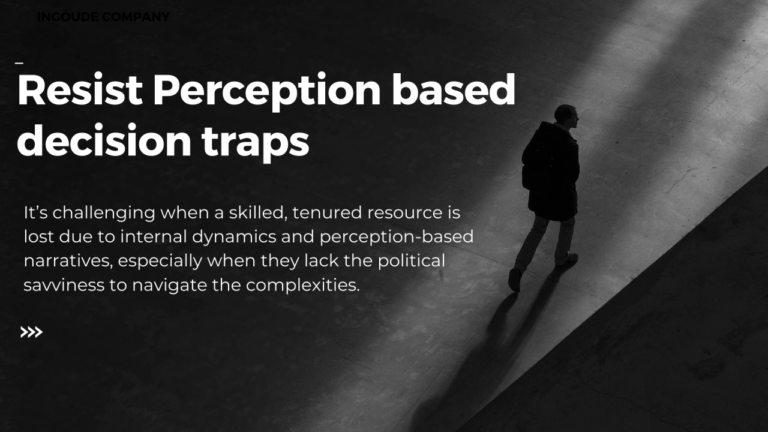
Breaking the Perception Trap: How HR Can Combat Unfair Workplace Narratives
HR departments often find themselves caught between objective performance data and subjective workplace perceptions. When talented employees are labeled unfairly, it creates a cascade effect that can damage both individual careers and organizational effectiveness.
The challenge becomes even more complex when these perception-based narratives gain momentum through informal networks, making them harder to address through traditional HR channels. Understanding these patterns is the first step toward building more equitable and effective talent management practices.
By recognizing common perception traps and implementing strategic interventions, HR professionals can better protect valuable employees while fostering a culture that values substance over surface-level impressions.
“When skilled employees are lost due to perception-based narratives, organizations don’t just lose talent—they lose institutional knowledge and competitive advantage.”
10 Common Perception-Based Narratives
Recognizing these patterns is crucial for HR professionals who want to protect valuable talent and maintain organizational effectiveness.
The High Standards Paradox
Labeling an employee as “difficult to work with” because they have high standards or ask critical questions. This label can overshadow their actual contributions, leading others to view them negatively rather than recognizing their commitment to quality and improvement.
The Introvert Bias
When a quiet or introverted employee is seen as “lacking leadership potential” simply because they don’t actively seek the spotlight. This perception can cause others to overlook their strong analytical skills, dependability, and deep expertise.
The Independent Worker Trap
A common perception-based narrative is labeling an employee as “not a team player” simply because they prefer to work independently or focus deeply on individual tasks. This can overshadow their effectiveness, dedication, and ability to deliver high-quality work.
The Critical Thinker Penalty
When an employee who frequently voices concerns or offers alternative ideas is labeled as “negative” or “resistant to change.” This can lead others to dismiss their input, even if their insights could identify risks or improve project outcomes.
The Experience Discount
When a seasoned employee is viewed as “stuck in their ways” simply because they rely on proven methods rather than adopting every new trend. This perception can cause others to overlook their experience, stability, and deep institutional knowledge.
The Quality-First Misconception
When a detail-oriented employee is labeled as “slow” or “indecisive” because they take extra time to ensure accuracy and quality. This can overshadow their dedication to thoroughness and lead others to undervalue their work.
The Documentation Dilemma
When an employee who consistently documents everything or asks questions over email is labeled as “overly cautious” or “distrustful.” This behavior might simply reflect their preference for clarity and accountability, yet others may misinterpret it as a lack of confidence or trust.
The Transparency Misunderstanding
When an employee frequently CCs or BCCs others on emails, leading to assumptions that they are “playing politics” or “lacking trust.” While their intent may be to ensure transparency or keep key stakeholders informed, it can be misinterpreted as an attempt to escalate issues or avoid direct communication.
The Customer-First Conflict
When an employee prioritizes the client’s perspective and often speaks in terms of client needs and goals. This focus, intended to enhance alignment and client satisfaction, may be misinterpreted by parent company managers as “taking the client’s side” or being less loyal to the company’s objectives.
The Approval-Seeking Trap
When a project manager seeks approvals from business heads for every small decision. While this may come from a desire to ensure alignment and avoid missteps, it can be misinterpreted as a lack of confidence, decision-making ability, or an overly cautious approach.
Strategic HR Interventions
HR sometimes faces limitations in influence and buy-in, lacks documented evidence, or may give in to business pressure, leading to unfortunate outcomes. Here are strategies to help navigate and mitigate these challenges.
Identify Early & Coach Proactively
- Spot at-risk employees early: During performance reviews or through informal feedback, identify talented employees who may struggle with internal dynamics
- Develop tailored coaching: Offer support to help these employees understand organizational dynamics, enhancing their influence without compromising integrity
- Equip with skills: Provide training in stakeholder management, assertive communication, and situational awareness to make a significant difference
Promote 360-Degree Feedback Mechanisms
- Balanced feedback loops: Encourage regular, multi-level feedback, making it harder for a single narrative to dominate and ensuring a more comprehensive perspective
- Anonymous channels: Allow peers and subordinates to give input anonymously, helping HR capture a fuller view of an employee’s real impact and perception
Leverage Data & Track Impact
- Objective performance data: Tie contributions to measurable outcomes like project success rates, revenue impact, or productivity
- Narrative-tracking system: Maintain a record of cases where perception or politics influenced decisions about valuable resources
- Evidence-based advocacy: Present data alongside qualitative feedback to strengthen HR’s case when advocating for valuable employees
Build a Support Network with Leadership Champions
- Influential sponsorship: Identify leaders willing to sponsor at-risk employees, helping them gain visibility and credibility
- Influence stakeholders: Highlight the risks of losing tenured talent and the benefits of retention for organizational stability
- Leadership advocacy: Demonstrate leadership support to subtly shift perceptions and create protective networks
Enhance Transparency in HR’s Role
- Open communication on fairness: Emphasize HR’s commitment to fairness, showing employees that both performance and potential are valued
- Encourage manager transparency: Guide managers to address perception issues openly, fostering growth and challenging negative narratives
- Clear processes: Establish transparent procedures for addressing perception-based conflicts before they escalate
Building a Fair, Performance-Driven Culture
Implementing these strategies allows HR to strengthen a fair, performance-driven culture that values each individual’s true contributions beyond surface perceptions. This approach helps retain high-impact talent and nurtures a more supportive and inclusive work environment. The goal is not to eliminate all workplace dynamics, but to ensure that valuable employees aren’t lost due to misunderstood intentions or unfair characterizations that don’t reflect their actual performance and potential.
 HR QuotesPublic group · 2,552 members
